
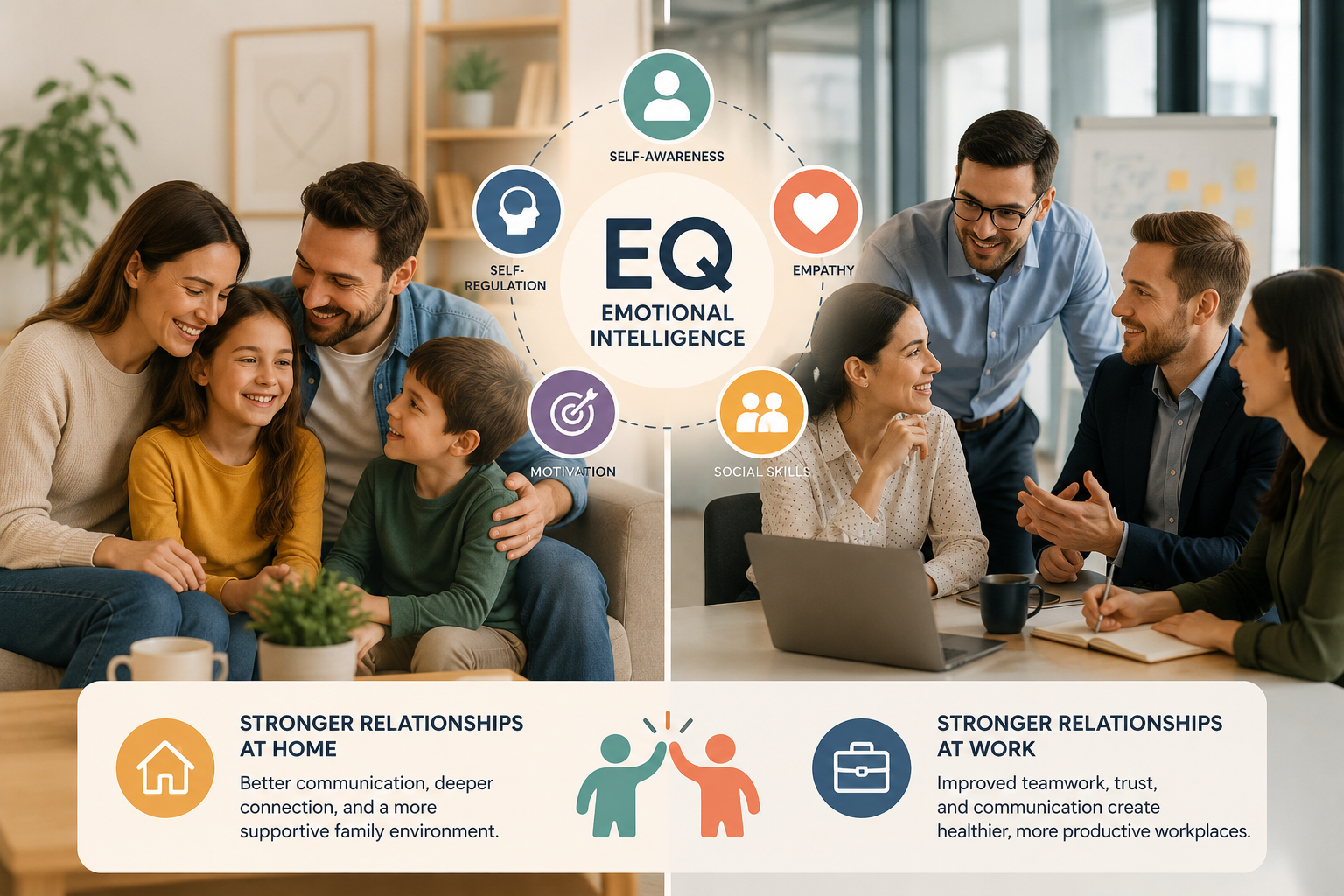
Healthy relationships don’t happen by chance—they are built through trust, communication, empathy, and mutual understanding. Whether at home with family or at work with colleagues, one skill consistently influences the quality of our interactions: Emotional Intelligence (EQ).
Emotional intelligence helps us recognise our own emotions, understand the feelings of others, and respond thoughtfully rather than react impulsively. These abilities create stronger personal connections, improve teamwork, and reduce unnecessary conflict.
In today’s fast-paced world, emotional intelligence has become one of the most valuable skills for building meaningful and lasting relationships.
What Is Emotional Intelligence?
Emotional intelligence is the ability to recognise, understand, manage, and express emotions effectively while also understanding the emotions of others.
It includes five essential skills:
- Self-awareness
- Self-regulation
- Motivation
- Empathy
- Social skills
Together, these abilities shape how we communicate, solve problems, and connect with people.
Why Emotional Intelligence Matters in Relationships
Relationships thrive when people feel heard, respected, and understood.
Emotional intelligence helps people:
- Communicate openly
- Resolve disagreements respectfully
- Build trust
- Express emotions appropriately
- Show empathy
- Support others during difficult times
- Strengthen emotional connections
Without these skills, misunderstandings and conflicts become more common.
Emotional Intelligence at Home
Home should be a place where people feel emotionally safe. Emotional intelligence helps create stronger family relationships by encouraging understanding, patience, and healthy communication.
Better Communication
Emotionally intelligent individuals express their thoughts and feelings clearly without blaming or criticising others.
Instead of saying:
“You never listen to me.”
They might say:
“I feel unheard when I’m interrupted.”
This approach reduces defensiveness and encourages constructive conversations.
Stronger Family Bonds
Parents who model emotional intelligence teach children valuable life skills.
Children learn to:
- Name their emotions
- Express feelings respectfully
- Solve problems calmly
- Develop empathy
- Build healthy friendships
These skills continue benefiting them throughout life.
Healthier Conflict Resolution
Disagreements are normal in every family.
Emotional intelligence helps family members:
- Listen before responding
- Stay calm during disagreements
- Respect different opinions
- Focus on solutions instead of blame
- Apologise when necessary
Conflict becomes an opportunity for growth rather than division.
Greater Emotional Support
Emotionally intelligent families recognise when someone needs encouragement or understanding.
Sometimes simply listening without offering immediate solutions makes the biggest difference.
Emotional Intelligence in the Workplace
Workplaces rely on collaboration, communication, and trust.
Employees with strong emotional intelligence often contribute to healthier and more productive work environments.
Improved Teamwork
People with high EQ understand different personalities and communication styles.
This helps teams:
- Collaborate effectively
- Share ideas openly
- Support one another
- Solve problems together
Better Leadership
Great leaders don’t simply manage tasks—they understand people.
Emotionally intelligent leaders:
- Inspire confidence
- Give constructive feedback
- Handle conflict professionally
- Build psychological safety
- Encourage collaboration
These qualities improve both employee satisfaction and organisational performance.
Managing Workplace Conflict
Conflict is unavoidable.
Emotional intelligence helps people:
- Stay calm under pressure
- Understand different perspectives
- Avoid personal attacks
- Find practical solutions
Healthy conflict often leads to innovation and stronger relationships.
Increased Trust
Trust develops when people feel respected and understood.
Emotionally intelligent professionals:
- Keep commitments
- Communicate honestly
- Admit mistakes
- Show consistency
- Respect boundaries
Trust strengthens teams and improves long-term collaboration.
The Role of Empathy
Empathy is one of the most powerful aspects of emotional intelligence.
It means understanding another person’s emotions without immediately judging or trying to fix them.
Empathy helps us:
- Build deeper relationships
- Improve communication
- Reduce misunderstandings
- Support others during challenges
- Create emotionally safe environments
Feeling understood is one of the strongest foundations of healthy relationships.
Common Habits of Emotionally Intelligent People
People with strong emotional intelligence often:
- Listen more than they speak
- Stay curious instead of making assumptions
- Think before reacting
- Accept feedback gracefully
- Respect personal boundaries
- Manage stress effectively
- Communicate honestly
- Show appreciation regularly
These habits strengthen relationships over time.
Practical Ways to Improve Emotional Intelligence
Developing emotional intelligence is a lifelong journey.
Here are some practical strategies:
Practice Active Listening
Focus completely on the speaker without planning your response while they’re talking.
Pause Before Responding
Taking a few seconds before reacting allows you to choose a thoughtful response instead of an emotional reaction.
Increase Self-Awareness
Ask yourself:
- What am I feeling?
- Why am I feeling this?
- How might my emotions affect this conversation?
Show Appreciation
Express gratitude regularly.
Simple recognition strengthens relationships both personally and professionally.
Learn to Apologise
A sincere apology demonstrates accountability and emotional maturity.
Respect Different Perspectives
People experience situations differently.
Curiosity often creates understanding where judgment creates conflict.
Emotional Intelligence and Mental Wellbeing
Healthy relationships contribute significantly to emotional wellbeing.
Likewise, emotional intelligence supports:
- Reduced stress
- Better emotional regulation
- Greater resilience
- Improved communication
- Higher life satisfaction
When relationships improve, emotional wellbeing often improves alongside them.
Common Myths About Emotional Intelligence
Myth 1: Emotionally intelligent people avoid conflict.
False.
They address conflict respectfully instead of avoiding it.
Myth 2: Emotional intelligence means agreeing with everyone.
False.
Emotionally intelligent people can disagree while remaining respectful.
Myth 3: Relationships depend only on personality.
False.
Relationship skills can be learned and improved through practice.
Final Thoughts
Strong relationships are built through understanding, empathy, communication, and trust—all of which are supported by emotional intelligence.
Whether you’re strengthening family connections, improving workplace collaboration, or developing your own communication skills, investing in emotional intelligence benefits every area of life.
Like any skill, emotional intelligence grows through awareness, practice, and a willingness to learn. Small changes in how we listen, respond, and connect with others can create lasting improvements in both personal and professional relationships.
Frequently Asked Questions
How does emotional intelligence improve relationships?
Emotional intelligence improves relationships by helping people communicate more effectively, manage emotions, resolve conflicts respectfully, and build trust through empathy and understanding.
Why is empathy important in relationships?
Empathy helps people understand each other’s emotions, reducing misunderstandings and strengthening emotional connections.
Can emotional intelligence improve workplace communication?
Yes. Employees with high emotional intelligence collaborate more effectively, communicate clearly, manage conflict professionally, and build stronger working relationships.
Can emotional intelligence be learned?
Absolutely. Emotional intelligence develops through self-awareness, emotional regulation, active listening, coaching, and consistent practice.
Why is emotional intelligence important for parents?
Parents who model emotional intelligence help children develop confidence, resilience, empathy, communication skills, and healthy emotional habits that benefit them throughout life.